Water Depth
Depth and underwater hazards are not guaranteed in park ponds or quarry-style basins.

PERMISSION REQUIRED*
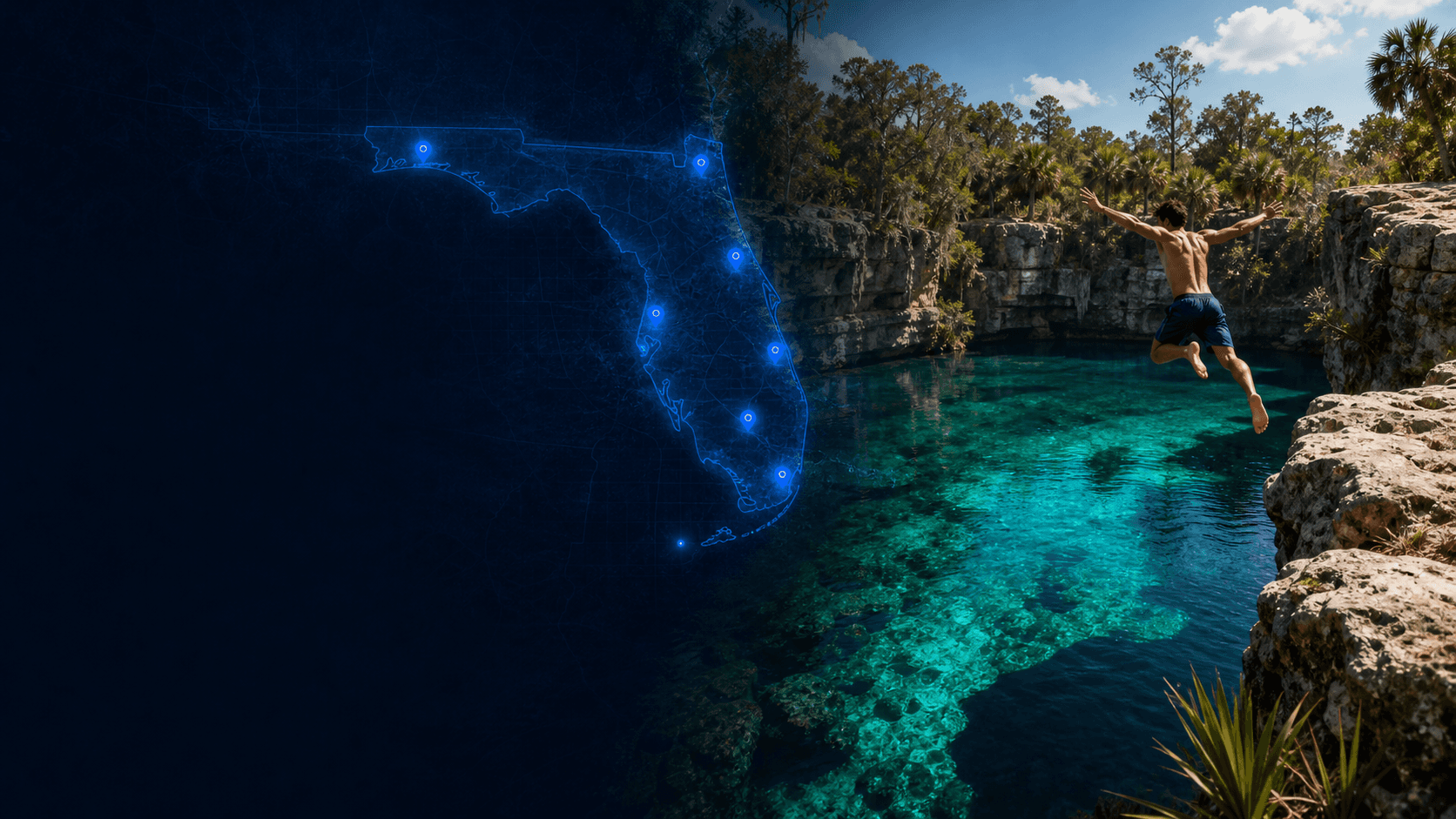
Hardrock is a quarry or park pond water jump spot in Ocala, Florida. The reported height is about 60 ft, but access and landing conditions must be verified on site.
PERMISSION REQUIRED: confirm legal access, depth, landing clearance, and a safe exit before treating Hardrock as jumpable.
Overview
Hardrock is a motocross park water-cliff reference with private access controls. Treat this guide as a planning overview, then verify access, water level, landing depth, and exits at the site before considering a jump.
Quick Answer
Hardrock is a quarry or park pond water jump spot in Ocala, Florida. The reported height is about 60 ft, but access and landing conditions must be verified on site.
Key Takeaway
PERMISSION REQUIRED: confirm legal access, depth, landing clearance, and a safe exit before treating Hardrock as jumpable.
Quick Answer
Hardrock is a quarry or park pond water jump spot in Ocala, Florida. The reported height is about 60 ft, but access and landing conditions must be verified on site.
Key Takeaway
PERMISSION REQUIRED: confirm legal access, depth, landing clearance, and a safe exit before treating Hardrock as jumpable.
Conditions and planning notes
Depth and underwater hazards are not guaranteed in park ponds or quarry-style basins.
Check current park policies and get explicit permission before approaching any cliffs or water.
Avoid off-road tracks, active riding areas, and unstable excavated slopes.
Private access rules, vehicle traffic, unstable slopes, submerged hazards, and hard exits are the main concerns.
Dirt and rock faces can be loose, rutted, and unsuitable as takeoffs.
Scout with a partner, avoid jumping alone, and leave if private access rules, vehicle traffic, unstable slopes, submerged hazards, and hard exits are the main concerns.
Map location
Ocala, United States
29.25711, -82.17615
Hardrock sits around Ocala, FL, United States, putting this jump spot in the orbit of Ocala and the broader FL area of United States. Use the saved coordinates and current map view as a starting point, then confirm the exact approach locally because cliff-jumping access can change around parks, private land, roads, shorelines, and water-management areas.
Seasonal conditions matter here, especially after storms, drought, high flow, or unusually low water. Conditions are not static: rain, snowmelt, drought, changing water levels, current, and weekend crowding can all change what looks like the same jump from one visit to the next. Treat saved route notes as background, not as a present-day clearance to jump.
The main assumed risks include cold or changing lake levels, submerged shelves, boat traffic, difficult exits, and limited rescue access. Access should be treated as conditional until signs, land ownership, permits, and local rules are confirmed. Before anyone climbs to a ledge, inspect the landing zone from the water, identify the exit, look for submerged rocks or debris, and be willing to walk away if the depth, footing, legality, or rescue options are uncertain.
FAQs