Cliff jumping safety
Cliff Jumping Safety
A safety-first cliff jumping guide for judging height, water depth, approach, weather, local rules, and group decision-making before visiting any jump spot.
In this guide
Planning focus
Cliff jumping safety
Use this cliff jumping safety guide to evaluate water depth, landing zones, exits, weather, access, group pressure, and conservative go/no-go decisions.
1. Start before the edge
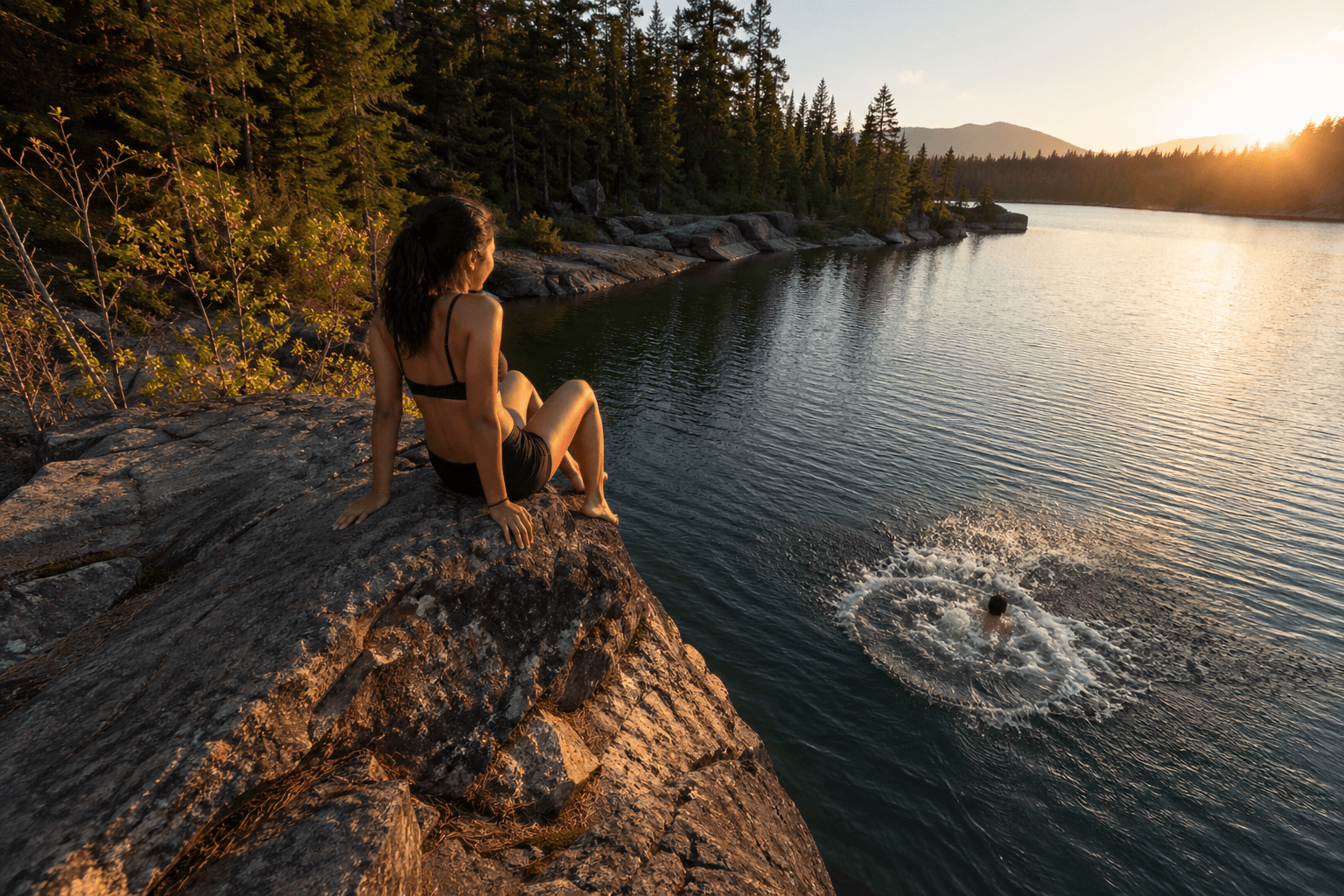
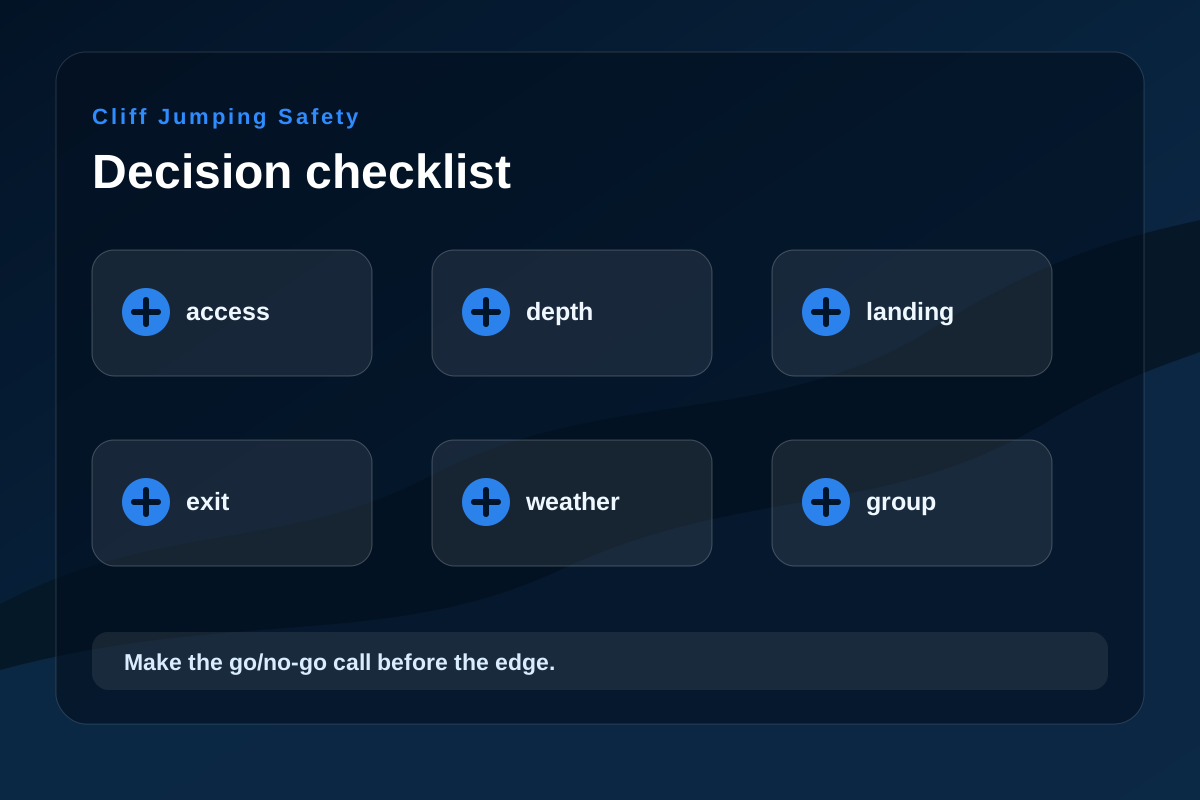
Good cliff jumping decisions happen before anyone stands over the water. The first pass should be about access, conditions, exits, and whether the group has enough information to continue.
- Check current rules, posted signs, hours, and closure notices.
- Study the landing zone from below before approaching the ledge.
- Decide who is not jumping and where they can safely watch.
- Set a group rule that anyone can stop the plan without pressure.
2. Height increases consequences
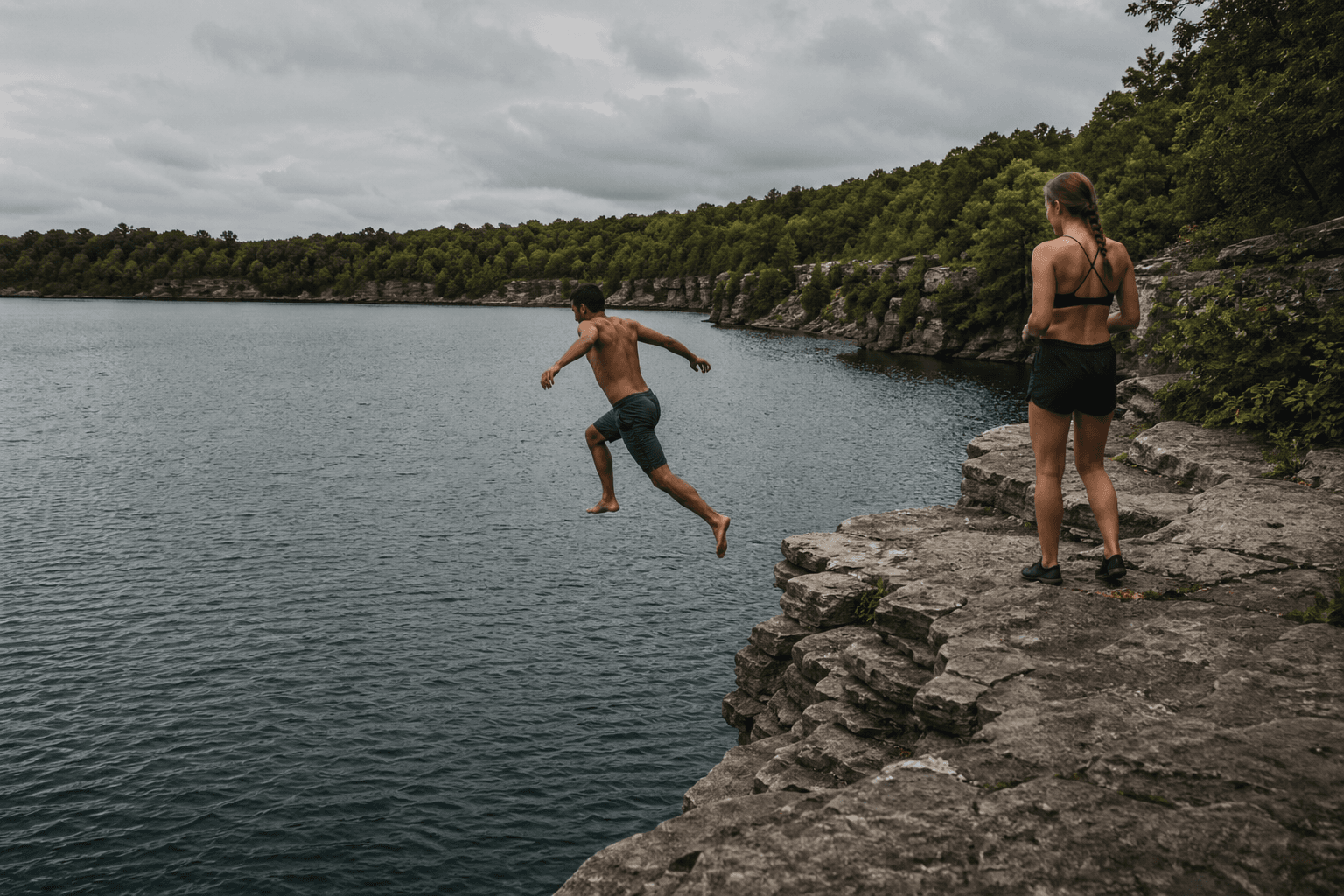
A small increase in height can make mistakes harder to recover from. Height should be treated as one part of a larger risk picture that includes depth, body control, water conditions, and exit quality.
- Do not copy another person's jump just because they landed cleanly.
- Avoid unfamiliar high jumps when depth or landing-zone shape is uncertain.
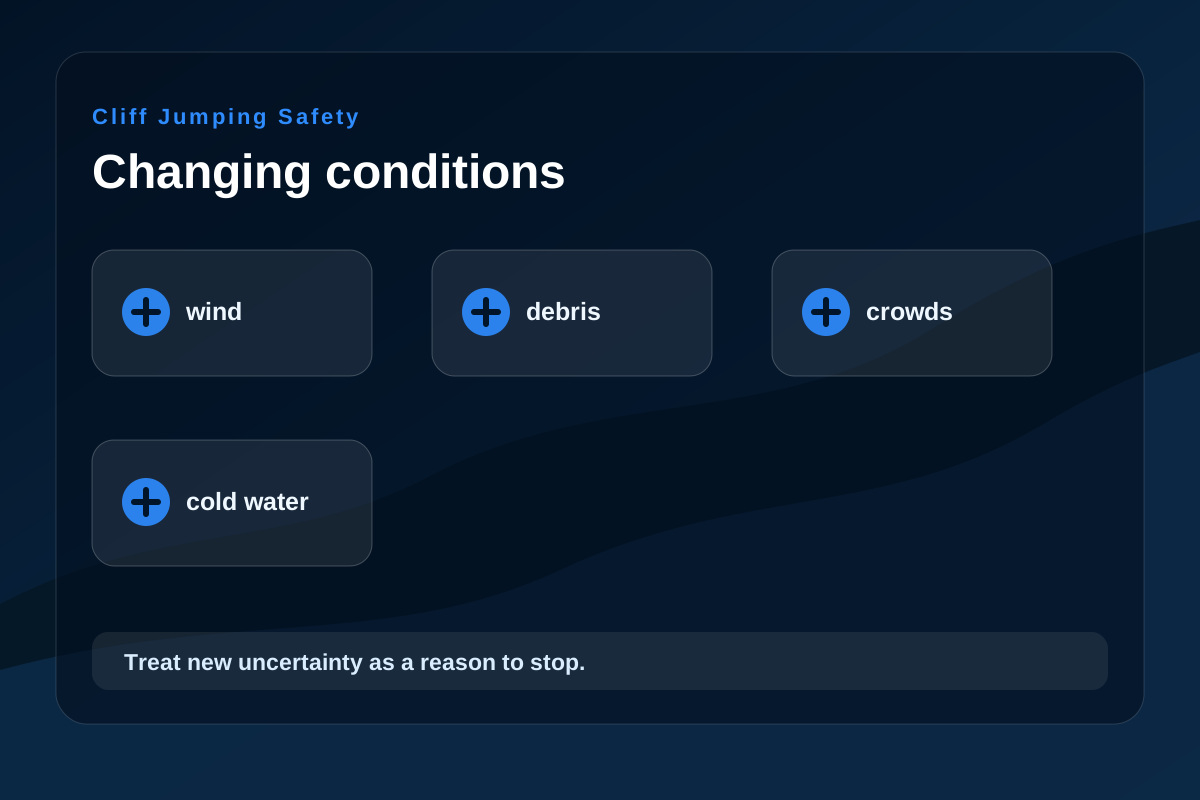
- Treat fatigue, cold water, wind, and crowd pressure as reasons to lower risk.
- Choose a different plan when the jump requires perfect execution.
3. Depth is only one part of the landing
A landing zone needs more than depth. It needs clear water, enough room, no hidden shelves, no swimmers in the impact area, and conditions that stay readable.
- Inspect for rocks, logs, ledges, uneven bottom, and sudden shallows.
- Check the actual landing line, not only the deepest-looking water nearby.
- Watch for boats, swimmers, anglers, and other jumpers.
- Recheck after weather, waves, dam releases, or changes in light.
4. Approach and exit matter as much as the jump
The route to the edge and the route out of the water can create as much risk as the landing. A clean jump is not a good plan if the exit is steep, slippery, private, or too far away.
- Identify the safest exit and confirm everyone can use it.
- Avoid exposed scrambles, loose rock, wet ledges, and unstable banks.
- Keep shoes, water, and essentials where they do not force risky retrievals.
- Leave extra margin when the exit involves current, surf, or cold water.
5. Manage people, not just terrain
Many bad decisions come from group momentum. Safety planning should make patience, honest skill matching, and backing out feel normal.
- Separate filming and cheering from decision-making.
- Match the plan to the least experienced person in the group.
- Avoid dares, countdown pressure, and rushed jumps.
- Keep someone watching the landing zone and exit while others are in the water.
6. Know when to walk away
Walking away is part of responsible cliff jumping. If the water, access, exit, weather, or group readiness is not clear enough, keep the location for another day.
- Stop when visibility is poor or the bottom cannot be checked.
- Stop when access depends on ignoring signs or crossing private property.
- Stop when cold, fatigue, or changing weather narrows your margin.
- Pick another nearby spot or switch to a non-jumping plan.
Cliff Jumping Safety FAQs
Can any checklist make cliff jumping safe?
No checklist can remove the risk. A checklist helps organize decisions, but current conditions, local rules, water depth, exit quality, and personal limits still decide whether to stop.
How do I know if a cliff is too high?
Height is too high when the landing, depth, exit, conditions, or your control are uncertain. Treat higher jumps as higher consequence, not as a challenge to prove.
What should a group decide before jumping?
Agree on the landing zone, exit, no-pressure rules, who watches the water, and what conditions would end the session. Clear decisions reduce rushed choices.
Is a popular jump spot automatically safer?
No. Popular spots can still change with weather, water level, debris, crowding, closures, and access pressure. Verify the spot as it is today.