Water Depth
No current landing-zone depth is verified for the exact coastal entry line. Tide, swell, reef, rock shelves, visibility, and wave timing can change the usable depth and exit within minutes.

DANGEROUS WATER CONDITIONS*
Kailua. is a ocean cliff / shoreline near Kailua, HI, United States. Verify access, posted rules, water depth, hazards, and exit conditions before treating it as jumpable.
the 60-foot height reference matters less than current access, landing-zone depth, water conditions, and a dependable exit route.
Overview
Kailua. is a coastal cliff-diving lead near Kailua, HI, United States, where surf, tide, current, and exit conditions matter more than the height reference. Treat the 60-foot context as a planning cue only until the exact entry line, landing zone, and climb-out are checked in calm conditions.
Quick Answer
Kailua. is a ocean cliff / shoreline near Kailua, HI, United States. Verify access, posted rules, water depth, hazards, and exit conditions before treating it as jumpable.
Key Takeaway
the 60-foot height reference matters less than current access, landing-zone depth, water conditions, and a dependable exit route.
Quick Answer
Kailua. is a ocean cliff / shoreline near Kailua, HI, United States. Verify access, posted rules, water depth, hazards, and exit conditions before treating it as jumpable.
Key Takeaway
the 60-foot height reference matters less than current access, landing-zone depth, water conditions, and a dependable exit route.
Conditions and planning notes
No current landing-zone depth is verified for the exact coastal entry line. Tide, swell, reef, rock shelves, visibility, and wave timing can change the usable depth and exit within minutes.
Confirm public access, land manager rules, posted signs, parking, and any seasonal restrictions before visiting Kailua.. Do not assume informal routes are open or permitted.
Approach as a shoreline viewpoint first. Use legal public access only, watch several wave cycles, identify the exit before entry, and turn around if signs, swell, or local conditions are unfavorable.
Surf, surge, tide, current, slippery rock, submerged reef or boulders, difficult exits, crowding, and limited rescue access.
The local ledge label is "Dangerous." Treat that as a warning, not an invitation; inspect the takeoff and landing zone from water level and skip it when conditions are uncertain.
Surf, surge, tide, current, slippery rock, poor visibility, difficult exits, and rescue access are the main concerns. Calm-looking water can still hide hazardous sets and submerged rock.
Map location
Kailua, United States
21.39303, -157.74968
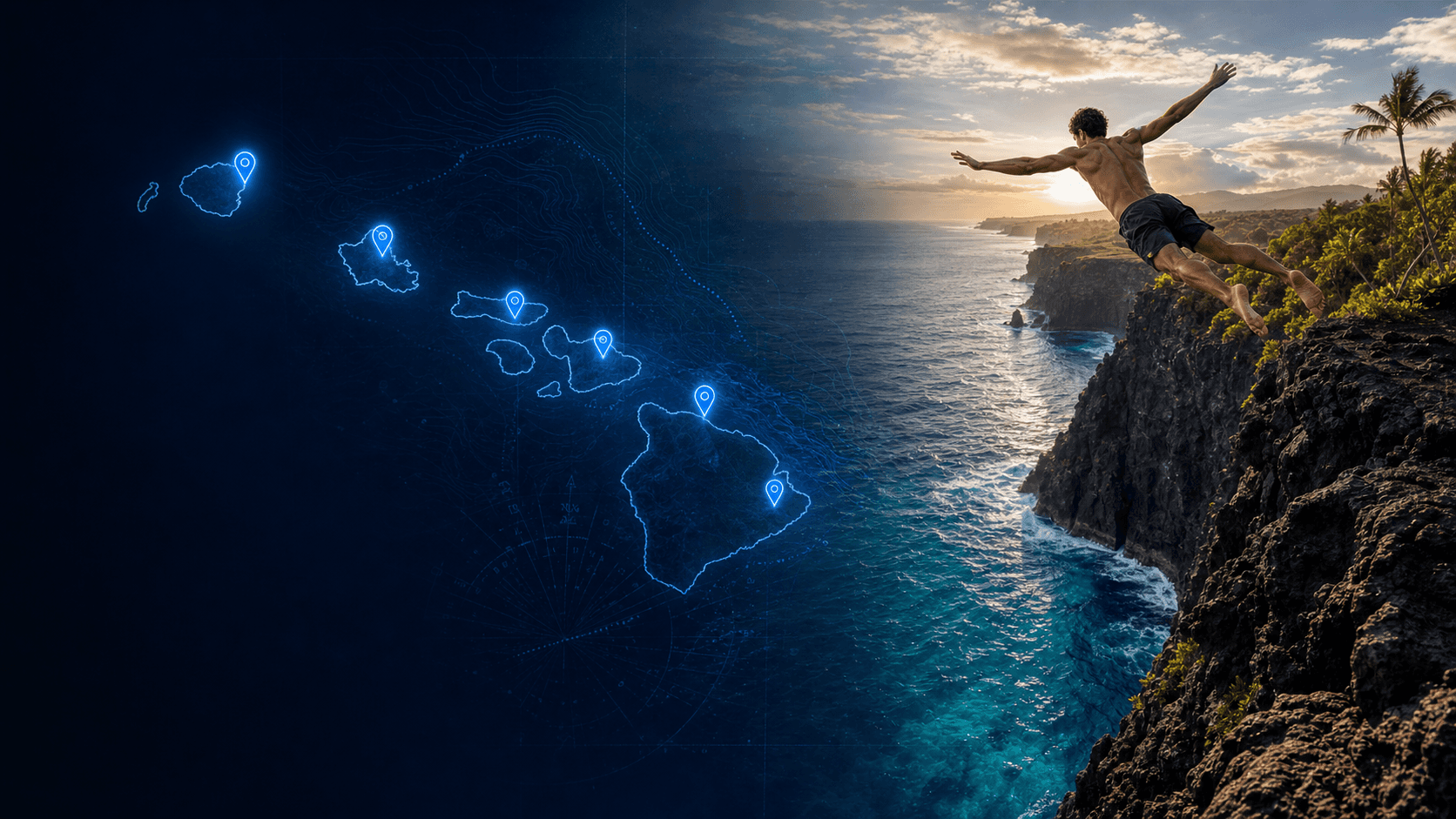
Kailua. sits around Kailua, HI, United States, putting this jump spot in the orbit of Kailua and the broader HI area of United States. Use the saved coordinates and current map view as a starting point, then confirm the exact approach locally because cliff-jumping access can change around parks, private land, roads, shorelines, and water-management areas.
Seasonal conditions matter here, especially after storms, drought, high flow, or unusually low water. Conditions are not static: rain, snowmelt, drought, changing water levels, current, and weekend crowding can all change what looks like the same jump from one visit to the next. Treat saved route notes as background, not as a present-day clearance to jump.
The main assumed risks include moving saltwater, hard exits, changing swell, hidden rocks, and delayed rescue access. Access should be treated as conditional until signs, land ownership, permits, and local rules are confirmed. Before anyone climbs to a ledge, inspect the landing zone from the water, identify the exit, look for submerged rocks or debris, and be willing to walk away if the depth, footing, legality, or rescue options are uncertain.
FAQs