Water Depth
Depth at Trask - Tillamook : Jump Spot should be treated as unverified until checked in person. Probe the landing zone from water level, account for seasonal water changes, and avoid jumping when the bottom, current, or exit is unclear.

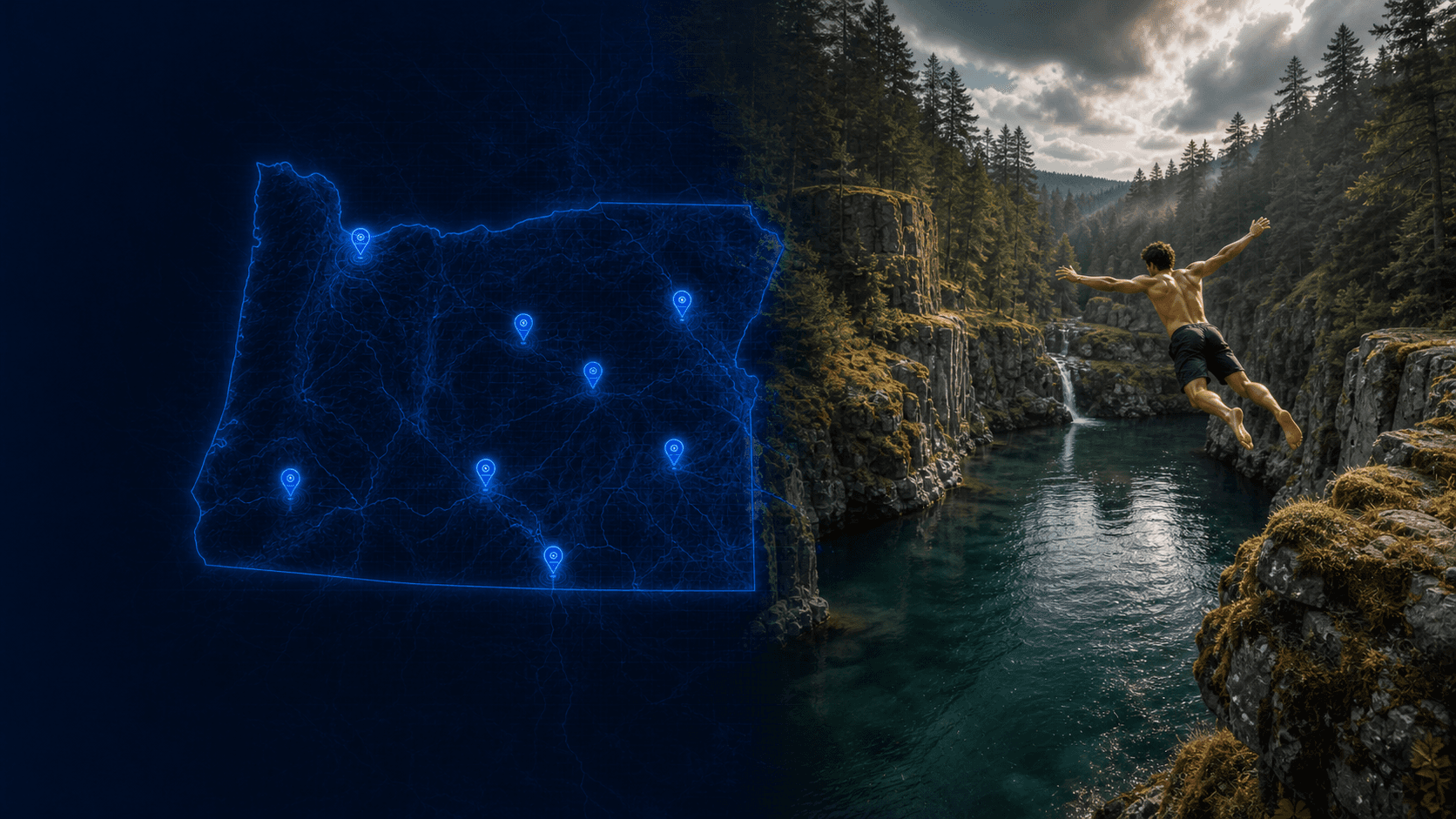
DEPTH, ACCESS, AND EXIT CONDITIONS MUST BE VERIFIED ON SITE
Yes, Trask - Tillamook : Jump Spot is listed as a cliff jumping spot near Tillamook, Oregon, United States, but it should be scouted carefully before any jump. Confirm access, depth, current conditions, and a clean exit before treating the spot as usable.
The main planning point for Trask - Tillamook : Jump Spot is verification: check access and water conditions on site, especially because the saved details show 40 ft reported and coordinates saved.
Overview
Trask - Tillamook : Jump Spot is a Tillamook, Oregon, United States river, gorge, or canyon water spot near Tillamook, Oregon, United States. Treat it as a scout-first cliff jumping stop: conditions can shift with water level, weather, crowds, and local access rules, so treat the mapped location as a planning lead, not as proof that any jump is usable on arrival.
Quick Answer
Yes, Trask - Tillamook : Jump Spot is listed as a cliff jumping spot near Tillamook, Oregon, United States, but it should be scouted carefully before any jump. Confirm access, depth, current conditions, and a clean exit before treating the spot as usable.
Key Takeaway
The main planning point for Trask - Tillamook : Jump Spot is verification: check access and water conditions on site, especially because the saved details show 40 ft reported and coordinates saved.
Quick Answer
Yes, Trask - Tillamook : Jump Spot is listed as a cliff jumping spot near Tillamook, Oregon, United States, but it should be scouted carefully before any jump. Confirm access, depth, current conditions, and a clean exit before treating the spot as usable.
Key Takeaway
The main planning point for Trask - Tillamook : Jump Spot is verification: check access and water conditions on site, especially because the saved details show 40 ft reported and coordinates saved.
Conditions and planning notes
Depth at Trask - Tillamook : Jump Spot should be treated as unverified until checked in person. Probe the landing zone from water level, account for seasonal water changes, and avoid jumping when the bottom, current, or exit is unclear.
Confirm public access for Trask - Tillamook : Jump Spot before you go. Parking, shoreline entry, park rules, private property boundaries, and seasonal closures can change independently of the saved spot record.
Use Tillamook, Oregon, United States as the orientation area, then walk the approach slowly enough to identify the legal entry, the takeoff, the landing zone, and the exit. Avoid improvised routes across unstable banks, wet rock, or restricted land.
Primary hazards include current, changing depth, submerged rocks, strainers, slick banks, and difficult downstream exits. Conditions can change quickly, so reassess the site each visit instead of relying on old reports or photos.
Inspect the ledge before using it. A usable takeoff should be dry, stable, free of loose rock, and aligned with a clear landing zone; wet, sloped, crowded, or crumbling edges are a reason to back off.
Trask - Tillamook : Jump Spot needs an on-site safety check every visit. Look for changing water levels, submerged rocks, shallow shelves, strong current, boat traffic, surf, or debris before anyone climbs to a ledge.
Map location
Tillamook, Oregon, United States
45.43648, -123.72193
Trask - Tillamook : Jump Spot sits around Tillamook, Oregon, United States, putting this river or gorge spot in the orbit of Tillamook and the broader Oregon area of United States. Use the saved coordinates and current map view as a starting point, then confirm the exact approach locally because cliff-jumping access can change around parks, private land, roads, shorelines, and water-management areas.
In northern or mountain climates, spring runoff and cold water can be as important as ledge height. Conditions are not static: rain, snowmelt, drought, changing water levels, current, and weekend crowding can all change what looks like the same jump from one visit to the next. Treat saved route notes as background, not as a present-day clearance to jump.
The main assumed risks include cold or changing lake levels, submerged shelves, boat traffic, difficult exits, and limited rescue access. Access should be treated as conditional until signs, land ownership, permits, and local rules are confirmed. Before anyone climbs to a ledge, inspect the landing zone from the water, identify the exit, look for submerged rocks or debris, and be willing to walk away if the depth, footing, legality, or rescue options are uncertain.
FAQs