Water Depth
Depth at Rio Colorado Cliff Diving is not guaranteed by saved notes. Check the landing zone every visit because floods, drought, tides, releases, and debris can change the safe water column.

DEPTH, ACCESS, AND CONDITIONS UNCONFIRMED*
Rio Colorado Cliff Diving can be used for cliff jumping research around Costa Rica, Sin., Mexico, but only after checking access, depth, hazards, and the exit route on site.
Do not treat Rio Colorado Cliff Diving as a guaranteed jump. Scout the water and access first, and skip it when visibility, flow, waves, or permissions are uncertain.
Overview
Rio Colorado Cliff Diving is a Costa Rica, Sin., Mexico cliff diving spot in Costa Rica, Sin., Mexico. Treat it as a scout-first cliff diving stop: access, water level, current, landing depth, and the exit line should all be checked in person before anyone considers jumping.
Quick Answer
Rio Colorado Cliff Diving can be used for cliff jumping research around Costa Rica, Sin., Mexico, but only after checking access, depth, hazards, and the exit route on site.
Key Takeaway
Do not treat Rio Colorado Cliff Diving as a guaranteed jump. Scout the water and access first, and skip it when visibility, flow, waves, or permissions are uncertain.
Quick Answer
Rio Colorado Cliff Diving can be used for cliff jumping research around Costa Rica, Sin., Mexico, but only after checking access, depth, hazards, and the exit route on site.
Key Takeaway
Do not treat Rio Colorado Cliff Diving as a guaranteed jump. Scout the water and access first, and skip it when visibility, flow, waves, or permissions are uncertain.
Conditions and planning notes
Depth at Rio Colorado Cliff Diving is not guaranteed by saved notes. Check the landing zone every visit because floods, drought, tides, releases, and debris can change the safe water column.
Confirm that Rio Colorado Cliff Diving is currently open and that the route in is allowed before entering the area. The nearest saved address is Calle Barrio Estacion 13, Batarete, 80430 Costa Rica, Sin., Mexico, but access can differ from the mapped point. Respect closures, private property, posted rules, and parking limits.
Approach Rio Colorado Cliff Diving slowly enough to inspect footing, wet rock, loose dirt, changing water level, and the return route. Do not rely on a jump line unless you can also see a practical way back out.
Primary hazards at Rio Colorado Cliff Diving include uncertain depth, underwater obstacles, slippery takeoffs, hard exits, changing water movement, weather shifts, and possible access restrictions.
Treat every ledge at Rio Colorado Cliff Diving as variable. Inspect the takeoff for traction, slope, loose rock, clearance from the wall, and enough room to stop if the jump does not feel right.
Rio Colorado Cliff Diving needs a full visual inspection before any jump: look for shallow shelves, submerged debris, changing current, boat traffic, wave surge, and a clean swim-out or climb-out line.
Map location
Costa Rica, Sin., Mexico
24.58832, -107.38744
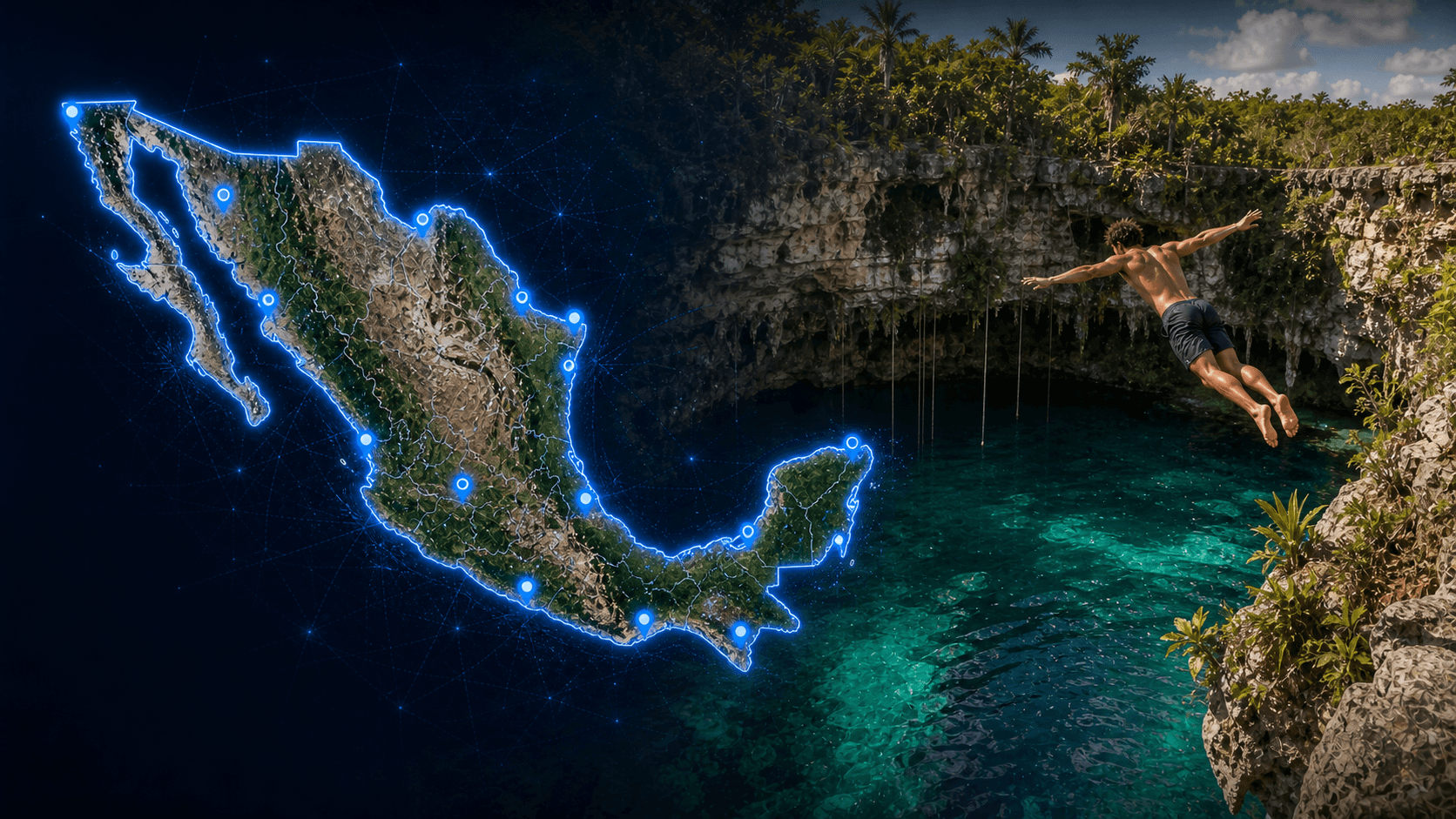
Rio Colorado Cliff Diving sits around Costa Rica, Sin., Mexico, putting this structure-adjacent water spot in the orbit of Costa Rica and the broader Sin. area of Mexico. Use the saved coordinates and current map view as a starting point, then confirm the exact approach locally because cliff-jumping access can change around parks, private land, roads, shorelines, and water-management areas.
Warm-weather regions can still swing sharply between calm water and dangerous surf, storm runoff, or fast currents. Conditions are not static: rain, snowmelt, drought, changing water levels, current, and weekend crowding can all change what looks like the same jump from one visit to the next. Treat saved route notes as background, not as a present-day clearance to jump.
The main assumed risks include variable flow, shallow shelves, hydraulic features, slippery rock, and limited downstream recovery room. Access should be treated as conditional until signs, land ownership, permits, and local rules are confirmed. Before anyone climbs to a ledge, inspect the landing zone from the water, identify the exit, look for submerged rocks or debris, and be willing to walk away if the depth, footing, legality, or rescue options are uncertain.
FAQs