Waterfall jumping guide
Waterfall Jumping 101
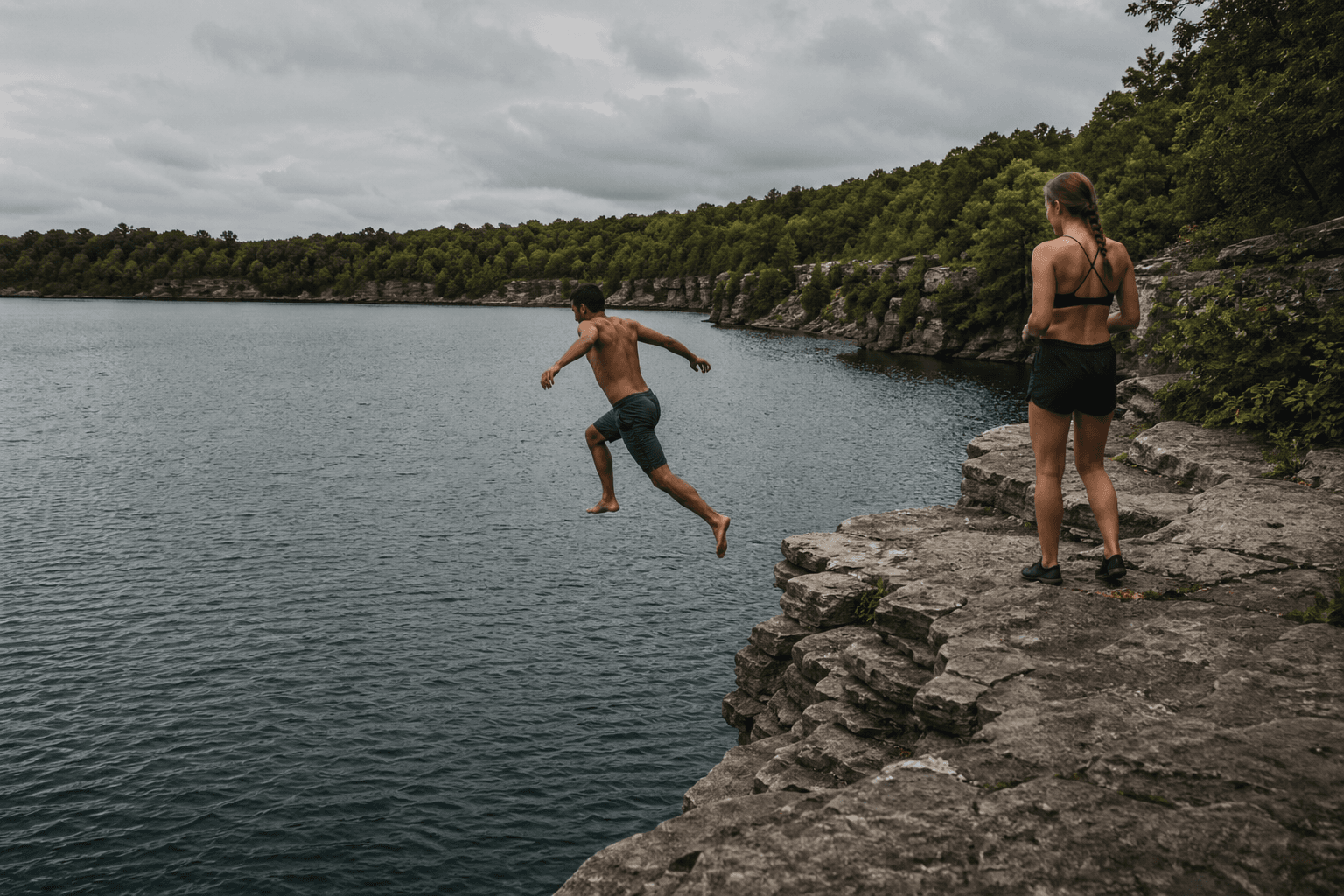
A practical waterfall jumping guide for evaluating flow, approach routes, landing zones, pool depth, exits, and changing conditions before anyone gets near the edge.
In this guide
Planning focus
Waterfall jumping guide
Plan waterfall jumping with a safety-first guide to flow, depth, landing zones, access, exits, weather, and when to choose a different spot.
1. Start with the water, not the ledge
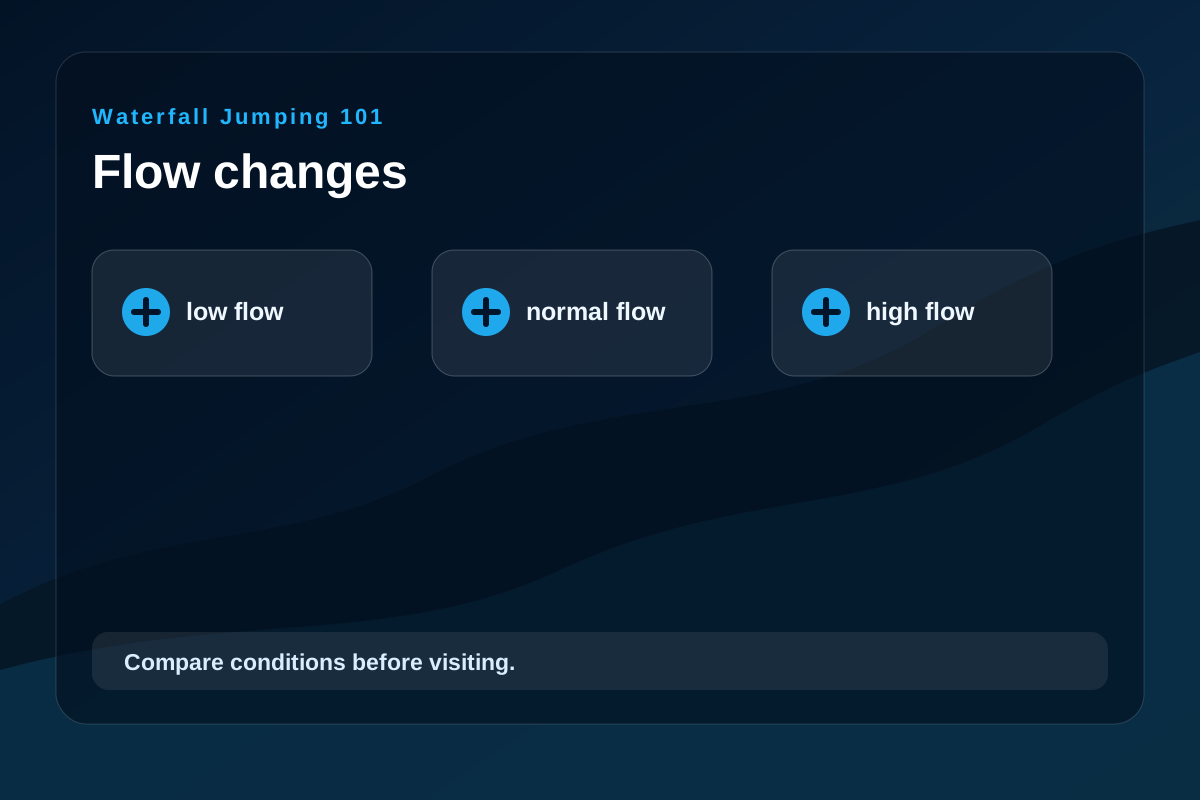
Waterfalls can change more than lake or quarry spots because flow, aeration, rain, snowmelt, and debris all affect the landing zone. Treat the jump as a moving system instead of a fixed feature.
- Review recent rain, snowmelt, dam release, and drought conditions before visiting.
- Watch the water from below and downstream before considering any jump.
- Avoid pools where heavy flow, foam, or turbulence blocks a clear view of the landing zone.
- Do not rely on old videos or past trip reports as proof of current conditions.
2. Read the whole plunge pool
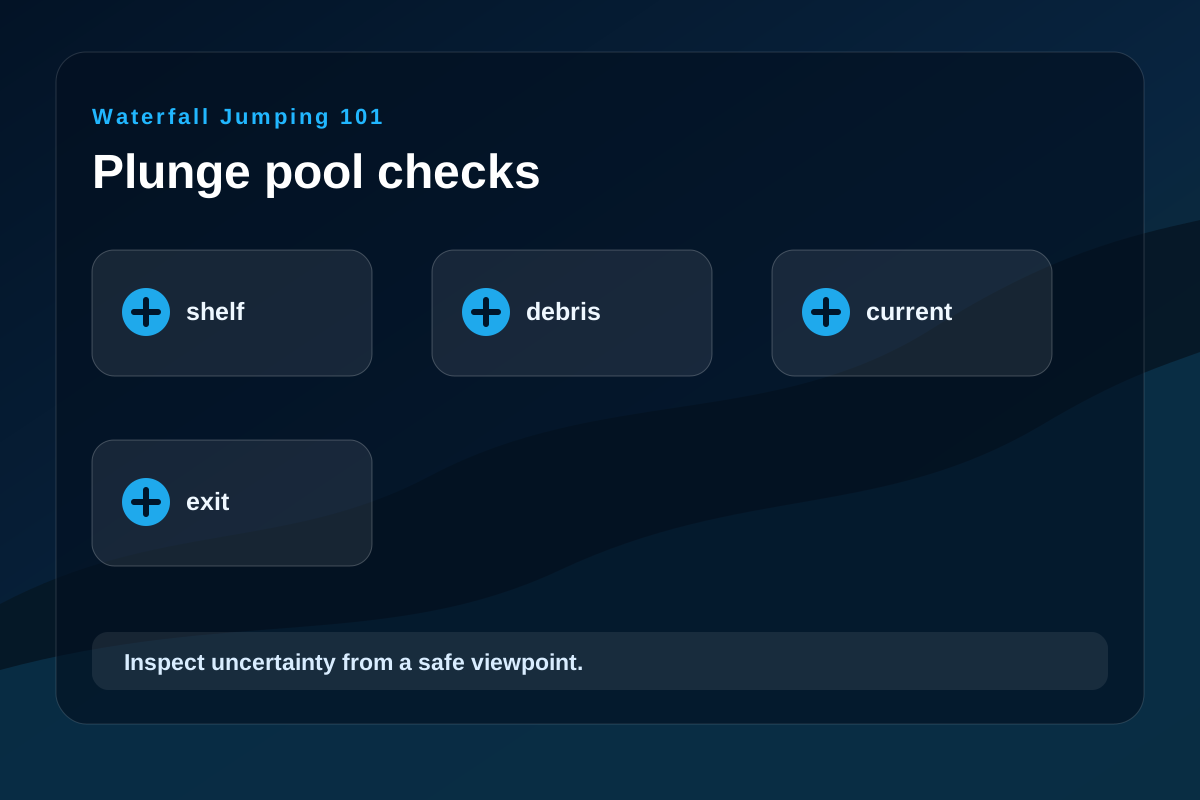
A waterfall pool can look deep in the center and still hide rock shelves, sloped bottoms, logs, or strong current lines near the actual landing area.
- Look for depth changes across the full landing zone, not only the darkest water.
- Check for submerged shelves close to the fall line and near the exit side.
- Treat cloudy, brown, foamy, or glare-heavy water as uncertain.
- Keep other swimmers and jumpers clear of the landing area.
3. Plan the approach and exit together
The easiest path to the top is not always the safest path back out. Waterfall terrain often includes slick rock, steep banks, moss, loose soil, and narrow scramble routes.
- Identify the exit before anyone enters the water.
- Check whether the exit still works for a tired or cold swimmer.
- Avoid routes that require climbing wet rock or crossing private land.
- Keep the group close enough to communicate without crowding the edge.
4. Respect access, closures, and local pressure
Many waterfall spots sit inside parks, preserves, neighborhoods, or sensitive natural areas. Access can change quickly after injuries, crowding, litter, fire risk, or erosion.
- Follow posted signs, ranger guidance, hours, and seasonal closures.
- Park legally and keep noise down near homes, trailheads, and campgrounds.
- Stay on durable paths where they exist and pack out every item you bring.
- Skip the spot if access depends on crossing fences or ignoring closure notices.
5. Match the day to your experience
A waterfall that feels manageable in calm, clear, low water can become a poor choice when the pool is high, cold, crowded, or hard to read.
- Choose lower-consequence plans when the group is new to the spot.
- Avoid pressure to jump because others are doing it.
- Build in time to leave and choose another location.
- Make the conservative call when the landing, exit, or access picture is incomplete.
6. Use iCliffDive as a planning layer
Spot pages, the map, and guide notes can help you compare options, but conditions still need local verification on the day you visit.
- Use the map to compare nearby locations before committing to one plan.
- Read spot warnings, quick facts, water notes, and access notes together.
- Check official park or land-manager sources where available.
- Send corrections when a spot page needs updated access or hazard context.
Waterfall Jumping 101 FAQs
Is waterfall jumping safer when the pool looks deep?
A deep-looking pool is not enough. Waterfall pools can hide shelves, debris, aerated water, and current, so the landing zone still needs careful local verification.
What is the biggest waterfall jumping mistake?
The biggest mistake is judging the ledge before judging the water, exit, access, and current conditions. Start from below and treat uncertainty as a reason to stop.
Should I jump after heavy rain?
Heavy rain can raise flow, move debris, reduce visibility, and change exits. If the pool is hard to inspect or the current feels stronger than expected, choose another plan.
How should beginners use this guide?
Use it to decide whether a waterfall is worth visiting, what to verify on arrival, and when to walk away. It is not a shortcut around local rules or site-specific judgment.